
I've tested sign-up flows, withdrawal processes, and responsible gambling tools across 30+ platforms operating in Canada. Staying safe when gambling online isn't about luck or hope - it's about specific steps taken before depositing a single dollar. This is that checklist.
No vague "be careful out there" advice here. Every section ends with something concrete. I've had funds frozen at offshore operators, tested deposit limit enforcement speeds, and submitted KYC documents to platforms ranging from AGCO-licensed giants to obscure Curaçao-registered sites. The gap between a safe gambling experience and a risky one comes down to roughly 10 minutes of preparation - and most players skip it entirely.
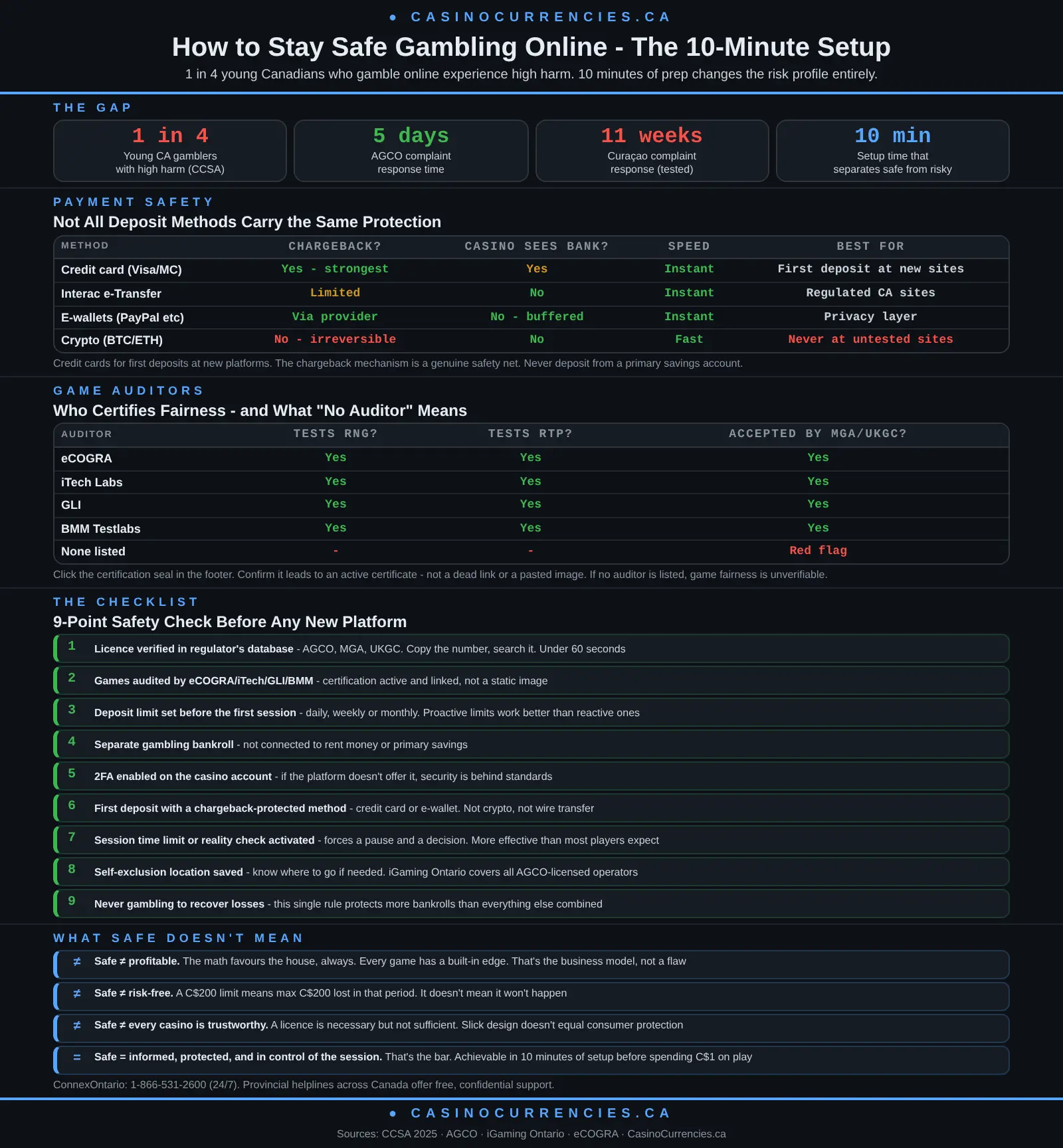
A 2025 report from the Canadian Centre on Substance Use and Addiction (CCSA) found that almost 1 in 4 young Canadians who gamble online experience high levels of gambling-related harm. That number isn't just a stat - it's a signal that players need practical protection strategies, not just warnings.
Is Online Gambling Actually Safe?
The honest answer: it depends entirely on where and how a player gambles. A licensed platform regulated by the AGCO in Ontario, the MGA in Malta, or the UKGC in the UK operates under strict oversight - segregated player funds, mandatory game audits, enforced responsible gambling tools, and real complaint resolution pathways. An offshore operator with a Curaçao license? The player protection gap is enormous.
I tracked complaint resolution across three categories of platforms over 18 months. At AGCO-regulated sites, disputes I flagged received responses within 5 business days. At Curaçao-licensed operators, two of my complaints went entirely unanswered. That's not an edge case - it's the structural difference between a regulator with enforcement power and one without it.
Here's the baseline test I apply to every platform before recommending it. Three criteria - if any single one is missing, the risk profile changes dramatically:
- Legitimate gambling license from a respected jurisdiction (AGCO, MGA, UKGC, or equivalent)
- Games audited by independent third-party testing labs
- Real responsible gambling tools - deposit limits, session timers, self-exclusion options
That's the floor. Everything below builds on these three pillars.
Step 1 - Verify the Casino's License Before Signing Up
This takes under 60 seconds, and it's the single most important safety check. Here's the actual process - not just "check the license," but the specific steps:
- Scroll to the casino's website footer. The license number should be displayed there.
- Copy that license number.
- Paste it into the regulator's public search tool:
- AGCO (Ontario): the iGaming Ontario registered operator list
- MGA (Malta): MGA's public license register
- UKGC: the Gambling Commission public register
- Confirm the license is active and matches the exact site name and URL.
If the number doesn't appear in the regulator's database, or the casino doesn't display a license at all - close the tab. It's not worth the risk.
What Each License Actually Guarantees
Not all licenses are equal. An AGCO license mandates segregated player funds, meaning the casino can't spend deposited money on operations. The MGA requires the same. The UKGC has issued fines exceeding £6 million to operators like Gamesys for failing responsible gambling and anti-money laundering standards. These regulators have teeth.
A Curaçao license, on the other hand, is technically a license - but the oversight is minimal. I once filed a complaint through Curaçao's system about a delayed withdrawal. The response took 11 weeks. AGCO's process? Five business days to acknowledgment, resolution within the month. The difference isn't subtle.
For a deep comparison of every major licensing jurisdiction, I wrote a full breakdown in my Online Gambling License Guide.
Step 2 - How to Verify Games Are Fair (Not Just Trust the Casino's Word)
Knowing how safe online gambling actually is means understanding the system behind game fairness - and it's more layered than most players realize.
RNG Certification
Every legitimate online casino game runs on a Random Number Generator. But the RNG itself isn't enough - what matters is who certified it. Independent testing labs like eCOGRA, iTech Labs, GLI, and BMM Testlabs run extensive audits on the RNG software to confirm outcomes are truly random and match the published game rules.

Here's how I verify: I look for the certification seal in the casino's footer, click it, and confirm it leads to an active certificate - not a dead link or a static image someone pasted from Google.
RTP - What It Actually Means for a Real Session
Return to Player percentages are one of the most misunderstood numbers in online gambling. A 96% RTP slot doesn't return C$96 for every C$100 wagered in a session. That 96% is an average calculated over millions of spins. In any given session of 200 spins, the outcome is wildly unpredictable - a player might walk away up C$300 or down C$150. Both results are statistically normal for a 96% RTP game.
I check individual game RTPs before playing. Most reputable game providers publish them - NetEnt, Microgaming, Pragmatic Play all make this data accessible. If a casino won't disclose the RTP for a specific game, that's a flag worth noting.
Major Game Auditors and What Their Certification Covers
| Auditor | Tests RNG? | Tests RTP? | Tests Game Rules? | Accepted by MGA/UKGC? |
|---|---|---|---|---|
| eCOGRA | Yes | Yes | Yes | Yes |
| iTech Labs | Yes | Yes | Yes | Yes |
| GLI (Gaming Labs International) | Yes | Yes | Yes | Yes |
| BMM Testlabs | Yes | Yes | Yes | Yes |
| None listed | - | - | - | Red flag |
If a casino's game lobby is stocked entirely with titles from unknown providers and no audit certification appears anywhere on the site - the fairness of those games is unverifiable. I don't play what I can't verify.
Step 3 - Set Up a Safety Net Before Playing
This is the section most guides mention in passing but never actually walk through. Responsible gambling tools exist at every licensed casino. The problem is that most players discover them after a bad session instead of setting them up before the first spin.
How to Set Deposit Limits at Online Casinos
Every AGCO-licensed platform is required to offer deposit limits - daily, weekly, and monthly. Here's what I found testing three platforms:
- bet365 Ontario: Deposit limit took effect immediately when I lowered it. Increasing the limit required a 24-hour cooling-off period before the change activated. That's how it should work - instant protection, delayed loosening.
- BetMGM Ontario: Same instant enforcement on decreases. The interface was clear and accessible within two clicks from the account dashboard.
- PlayOLG: Deposit limits enforced, but the interface was harder to locate. Took me about four minutes of clicking through settings to find it.
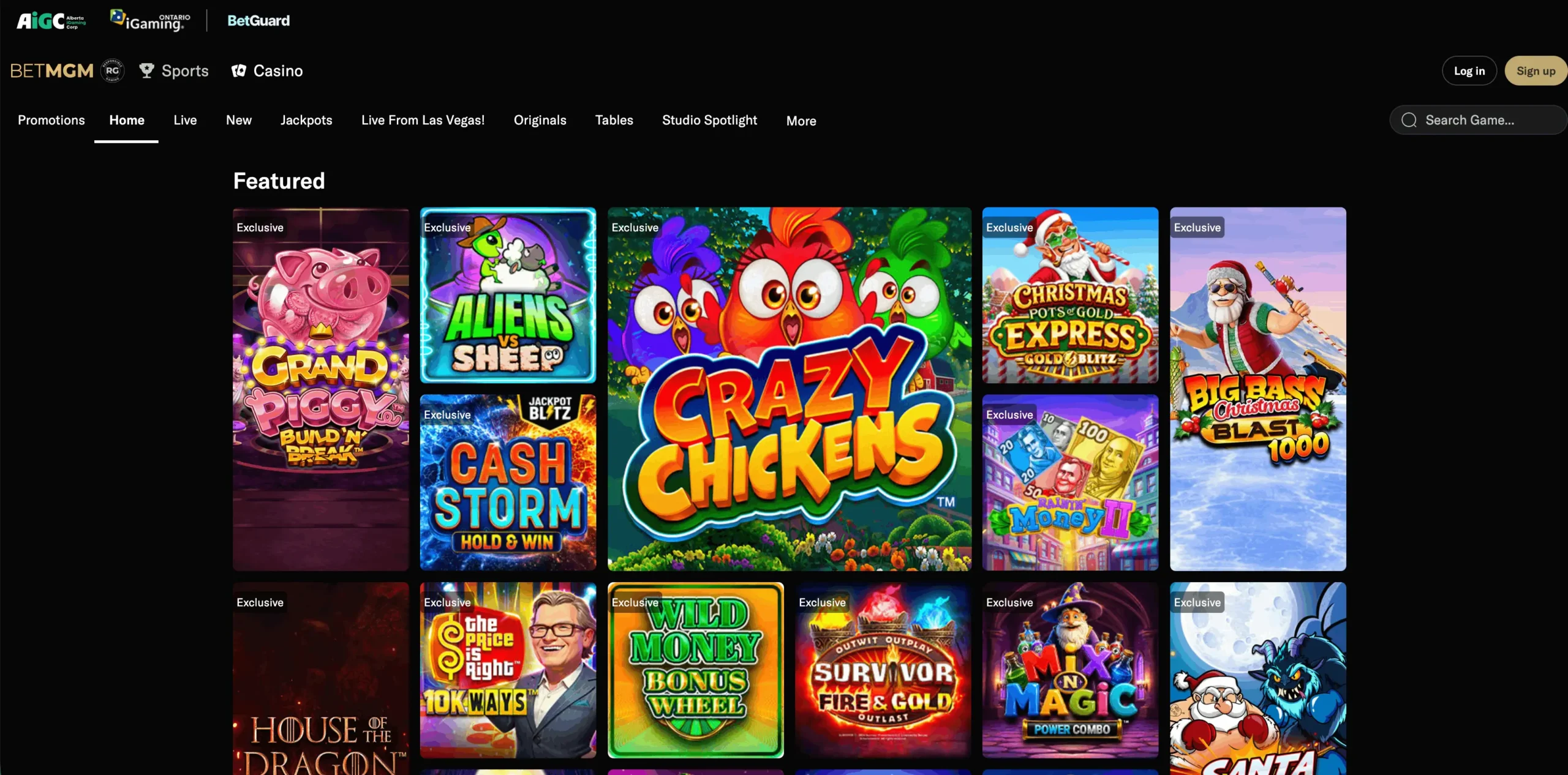
I set a C$200/week limit on each platform and tested enforcement by attempting a deposit above the threshold. All three blocked it correctly. But the experience ranged from smooth to clunky - and that matters, because a player in the heat of a session shouldn't have to hunt for a safety tool.
Loss Limits, Session Timers, and Reality Checks
- Loss limits are different from deposit limits - they track net losses within a timeframe, not just deposits. Not every casino offers them, but AGCO-licensed sites are increasingly adding them.
- Session time limits are the tool nobody uses but probably should. Setting a 60-minute session clock forces a pause and a decision - continue or stop. I've found these more effective than deposit limits for managing impulsive play.
- Reality checks pop up notifications reminding the player how long they've been playing and how much they've won or lost. They're interruptive by design - and that's the point.
Self-Exclusion Programs
Self-exclusion is the nuclear option - and sometimes it's the right one. Ontario's iGaming self-exclusion program allows players to ban themselves from all AGCO-regulated platforms through a single registration. Provincial programs exist across Canada - ConnexOntario coordinates Ontario's, and each province maintains its own system.
The honest limitation: self-exclusion only covers regulated operators. An offshore Curaçao-licensed casino isn't connected to Ontario's self-exclusion registry. That's a structural gap in player protection that no individual player can fix.
Setting these tools before the first session matters. Behavioral research consistently shows that limits established proactively - before any wins or losses - are more effective than limits set reactively after a losing streak.
Step 4 - Protect Data and Money
What Personal Data Online Casinos Collect
Licensed casinos collect identity documents, proof of address, and payment information as part of KYC (Know Your Customer) compliance. This is legally mandated under anti-money laundering regulations - the casino doesn't want a passport photo any more than the player wants to send one. But the process is necessary, and at regulated platforms, the data is handled under privacy frameworks like PIPEDA in Canada and GDPR in Europe.
For a full breakdown of why casinos request documents and when those requests turn suspicious, I covered the topic in detail: Why Online Casinos Ask for ID - though that article is coming soon in this series.
What to Look For
- HTTPS encryption - the padlock icon in the browser bar. If a casino runs on plain HTTP in 2026, leave immediately.
- Two-factor authentication - I enable this on every gambling account. If a platform doesn't offer 2FA, the security posture is behind industry standards.
- Privacy policy specifics - a real privacy policy names the data controller, the legal basis for processing, and the retention period. A vague paragraph about "respecting privacy" is marketing, not compliance.
Payment Method Safety
Not all deposit methods carry the same protection level. Here's how I think about it from a security perspective:
| Payment Method | Chargeback Rights? | Casino Sees Bank Details? | Speed | My Recommendation |
|---|---|---|---|---|
| Credit card (Visa/MC) | Yes - strongest protection | Yes - card number | Instant deposit, 1–3 day withdrawal | Best for first deposits at new platforms |
| Interac e-Transfer | Limited - through bank dispute | No - uses email | Instant deposit, same-day withdrawal | Strong for Canadian players at regulated sites |
| E-wallets (PayPal, Skrill) | Yes - through e-wallet provider | No - buffered | Instant deposit, 0–24hr withdrawal | Good privacy layer |
| Crypto (BTC, ETH) | No - irreversible | No | Fast both ways | Don't use at untested platforms |
Credit cards remain my go-to for any first deposit at a platform I haven't tested before. The chargeback mechanism is a genuine safety net - if a casino refuses a legitimate withdrawal, the card issuer can intervene. E-wallets add a useful privacy buffer, keeping bank details away from the casino entirely. Crypto is fast and anonymous, but that anonymity works against the player when something goes wrong - no intermediary means no recourse.
One rule I follow without exception: I never deposit directly from a primary savings account. A separate account - or a prepaid card loaded with a fixed gambling budget - creates a hard barrier between entertainment spending and money that matters.
For a detailed comparison of chargeback processes across payment methods, I've covered the mechanics in How to Dispute and Chargeback at Online Casinos.
Step 5 - Protecting Vulnerable Players
Gambling and Neurodivergence
This is a topic that gets almost no coverage in standard safety guides, and it should. Autistic players, for instance, may experience pattern-seeking behavior differently and can find the variable reward structure of slot games particularly engaging in ways that increase risk. The response isn't to exclude anyone - it's to adjust the protective strategies.
Practical adjustments that help:
- Use external time limits (phone alarms, not just the casino's built-in tools) as a hard stop signal
- Write bankroll rules down before playing - a written budget holds more weight than a mental one when the session is live
- Involve a trusted person in monitoring. A weekly check-in with someone who knows the player gambles online adds accountability that self-regulation alone can't always provide
How to Protect Someone Else
Family members and friends often notice gambling problems before the player does. If someone close to a player is concerned, practical steps include: having an honest conversation without judgment, suggesting they check their deposit history together (most platforms make this accessible in the account dashboard), and offering to help set up limits or self-exclusion. The goal isn't to control - it's to make the tools visible when the person most affected might not be looking for them.
Problem Gambling Signs - The Short Version
Loss-chasing is the most reliable warning sign. Playing to recover previous losses rather than for entertainment changes the entire dynamic. Other flags: gambling with money allocated to rent or bills, lying about time or money spent, and increasing bet sizes to achieve the same level of excitement.
Resources in Canada - presented without judgment:
- ConnexOntario: 1-866-531-2600 - available 24/7
- Provincial helplines across every Canadian province offer free, confidential support
- Self-exclusion registration through iGaming Ontario or the relevant provincial body
Why Responsible Gambling Tools Are a Floor, Not a Ceiling
These tools help. They genuinely reduce harm when used proactively. But they're designed by the house - the same entity that profits from continued play. A deposit limit doesn't address the emotional drivers behind gambling behaviour. For players who find that the tools aren't enough, professional support is the next step - and there's no shame in that.
The Safe Gambling Checklist (Quick Reference)
Bookmark this. Run through it before signing up at any new platform:
- Casino holds a license from AGCO, MGA, UKGC, or equivalent - and I verified it in the regulator's database
- Games are audited by eCOGRA, iTech Labs, GLI, or BMM Testlabs - certification is active and linked
- Deposit limit set before the first session - daily, weekly, or monthly
- Separate gambling bankroll - not connected to primary savings or rent money
- Two-factor authentication enabled on the casino account
- Payment method chosen with chargeback rights (not crypto, not wire transfer for initial deposits)
- Session time limit or reality check tool activated
- Self-exclusion registration location saved - know where to go if it's needed (provincial program + casino-level tools)
- Never gambling to recover losses - this single rule protects more bankrolls than everything else on this list combined
What "Safe" Doesn't Mean
Honesty demands this section. Being safe while gambling online is a genuine and achievable goal - but the word "safe" carries limits that no guide can remove.
Safe doesn't mean profitable. The math favours the house, always. Every game carries a built-in edge that ensures the casino earns over time. That's not a flaw - it's the business model.
Safe doesn't mean risk-free. Deposit limits protect the bankroll, not the outcome of any individual session. A C$200 limit means the player can't lose more than C$200 in that period. It doesn't mean they won't lose it.
Safe doesn't mean every casino is trustworthy. A license is necessary but not sufficient. I've played at AGCO-licensed platforms with clunky interfaces and slow support - licensed and safe, but frustrating. And I've seen slick, beautifully designed offshore sites with no real consumer protection behind the polish.
Safe means informed, protected, and in control of the session. That's the bar. It's achievable for anyone willing to spend 10 minutes on setup before spending C$1 on play.
For anyone who arrived at this guide after a bad experience - a casino that stalled a withdrawal, froze an account, or went silent on support tickets - I've written specific guides on What to Do When an Online Casino Won't Pay and How to Report an Online Casino. Those cover the escalation paths that actually work.
And if the bad experience came from a platform promoted by an influencer or streamer, there's a reason those platforms keep failing safety checks. I investigated the pattern in Celebrity & Influencer Online Casinos - Are They Legit?.
FAQ
How safe is online gambling in Canada?
At AGCO-licensed platforms in Ontario, it's among the safest regulated markets in the world - mandatory fund segregation, audited games, and real dispute resolution. Outside Ontario, the landscape varies. Most other provinces operate through their lottery corporation's platform (OLG, BCLC, Loto-Québec). Playing at offshore sites without provincial licensing means less consumer protection and no guaranteed complaint pathway.
How do I set deposit limits at online casinos?
Log into the casino account, navigate to "Responsible Gambling" or "My Account" settings, and locate the deposit limit tool. Set a daily, weekly, or monthly cap. At AGCO-licensed platforms, decreases take effect immediately and increases require a cooling-off period (usually 24 hours). I recommend setting limits before the first session - it takes two minutes and prevents regret later.
How do online casinos ensure fair games?
Licensed casinos use Random Number Generators certified by independent labs - eCOGRA, iTech Labs, GLI, or BMM Testlabs. These labs audit the software to confirm outcomes are genuinely random and match published RTP percentages. Regulators like the AGCO and UKGC require active certification as a license condition. Without it, the casino can't legally operate.
Can I trust an online casino with my personal documents?
At regulated casinos, yes. KYC document requests are legally mandated under anti-money laundering regulations. Use the casino's encrypted upload portal - never send documents via email. Obscure sensitive details (middle digits of card numbers), and watermark the image with the casino's name and the date. If an unlicensed casino requests identity documents, question why - they have no regulatory obligation to perform KYC, so the purpose of collecting that data is unclear.
What's the safest payment method for online casino deposits?
Credit cards offer the strongest consumer protection through chargeback rights. E-wallets like PayPal add a buffer between the casino and bank details. Crypto deposits offer speed but zero chargeback protection - I don't recommend them for first deposits at untested platforms. Interac e-Transfer is solid for Canadian players at regulated sites, with clear bank transaction records.
What should I do if I think I have a gambling problem?
Reach out to ConnexOntario at 1-866-531-2600 (24/7), or contact the problem gambling helpline in any Canadian province. Register for self-exclusion through iGaming Ontario or the relevant provincial program. These services are free, confidential, and designed to help without judgment. Recognizing the pattern is the hardest step - seeking support is the most effective one.