
Gambling content is one of the highest-paying sponsorship categories in live streaming. Some deals reportedly stretch into nine figures. I watched dozens of these streams over the past three years and dug into the platforms behind the flashy highlight reels. The results weren't exactly reassuring.
Every time a major streamer hits a massive win on camera, thousands of viewers rush to Google the same question: what online casino do streamers use? That question led me down a rabbit hole of Curaçao licenses, undisclosed partnerships, and platforms that block Canadian IP addresses but still somehow attract Canadian players. Here's what I found - the platforms, the deals, the licensing gaps, and what Canadian players should actually consider before following a celebrity's gambling link.
Why Celebrities and Streamers Promote Online Casinos
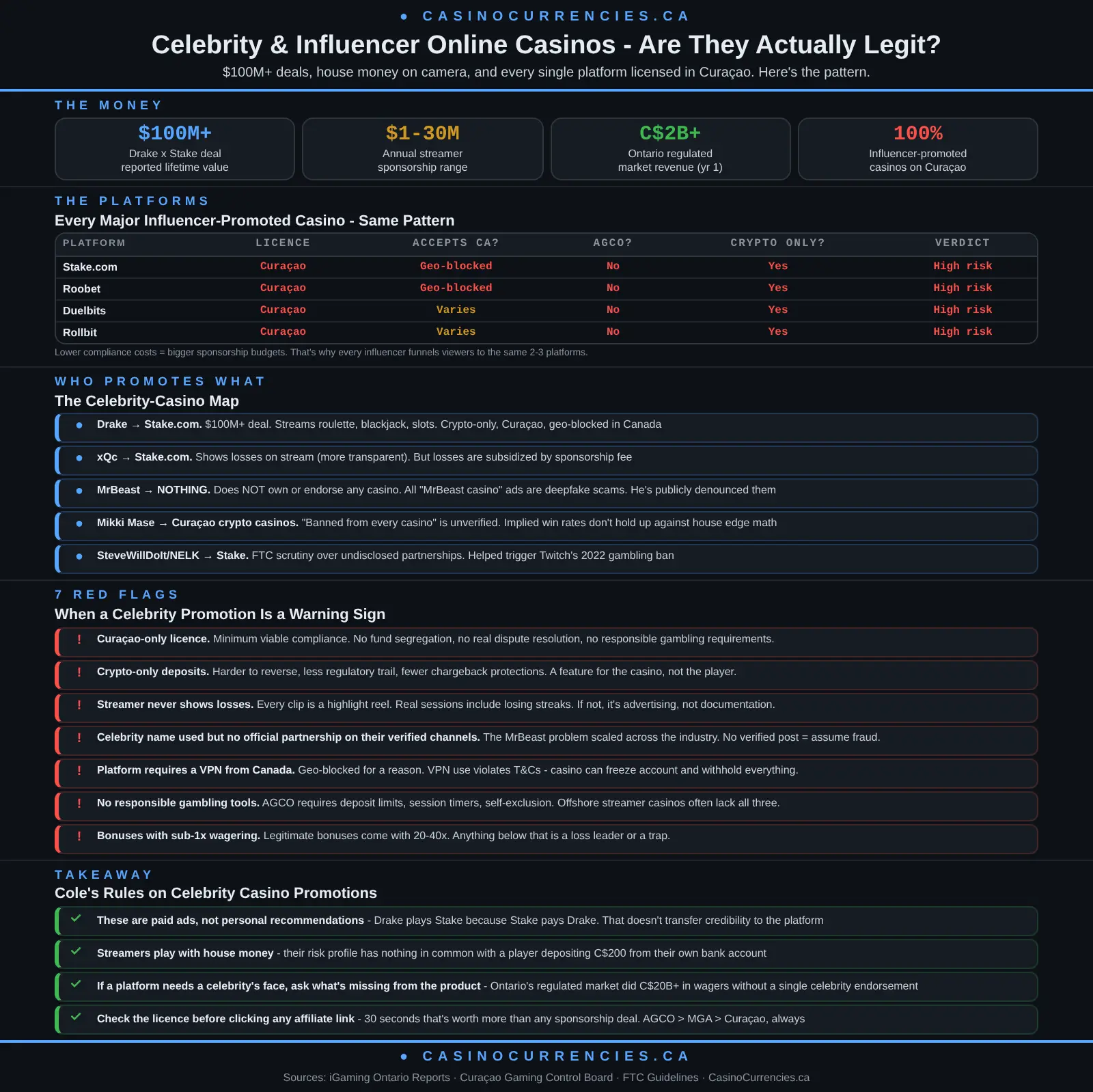
The money behind these partnerships is staggering. Stake.com's deal with Drake was reportedly worth over $100 million across its lifetime. That's not a typo - and it's not even the largest gambling sponsorship in the streaming world. Individual streamers have secured deals ranging from $1 million to $30 million per year just to play on camera.
The business model works in three ways. Some creators earn flat-fee sponsorships - a fixed monthly payment to stream on a specific platform. Others use affiliate codes, earning a percentage of the losses generated by players who sign up through their links. The third model is revenue share, where the streamer gets a cut of the platform's net gaming revenue from referred players. That last one is the most lucrative, and it's also the one that creates the biggest conflict of interest. The streamer profits directly when their audience loses.
The disclosure problem is real. I've watched streams where the gambling session looks organic - just a guy playing slots for fun - but the stream description buries a tiny "#ad" tag below the fold. The FTC requires clear, conspicuous disclosure of paid partnerships. Twitch's own guidelines echo this. But enforcement is spotty, and many viewers never scroll down far enough to see the fine print.
And here's the part that matters most: in most of these sponsored streams, the creator isn't playing with their own bankroll. The casino provides the funds. The streamer's risk profile is nothing like the viewer's. A C$50,000 loss on stream looks dramatic, but if the house is covering it, the streamer walks away with their sponsorship fee intact. The viewer who deposits C$500 trying to replicate that session doesn't have the same safety net.
What Online Casino Does Drake Use?
Drake's platform of choice is Stake.com. It's the crypto-only online casino that has become practically synonymous with celebrity gambling. Drake has streamed himself playing roulette, blackjack, and slots on Stake - sometimes wagering millions of dollars in a single session. His branded section on the platform, "Drake on Stake," became one of the most visible celebrity-casino partnerships in the industry.
Stake holds a gaming license from Curaçao. That means it has a license, technically, but Curaçao's regulatory framework is the lightest in the industry. There's no mandatory fund segregation, no independent dispute resolution body with real enforcement power, and minimal compliance requirements compared to AGCO in Ontario or the UKGC in Britain.
For Canadian players specifically, the situation gets complicated. Stake.com is geo-blocked in Canada and the United States. The platform isn't licensed under AGCO or any provincial regulator, which means zero local consumer protection for Canadian players. If something goes wrong - a frozen account, a disputed withdrawal - there's no Canadian authority to complain to. Some players access Stake through VPNs, but doing so likely violates the platform's terms of service, which could give the casino grounds to withhold winnings entirely.
My assessment after creating a test account and reviewing the platform's terms: Stake offers a polished product with a massive game selection. But the Curaçao license, crypto-only deposits, and lack of Canadian regulatory oversight make it a high-risk choice for anyone playing with money they can't afford to lose.
What Is MrBeast's Online Casino?
This one needs a hard correction: MrBeast does not own, operate, or endorse an online casino. Period. The persistent belief that MrBeast runs an online casino is fueled entirely by scam advertisements that use his name and likeness without permission.
I've tracked these fake ads across YouTube, TikTok, Facebook, and Instagram. They follow a consistent pattern - a deepfake or edited clip of MrBeast appears to promote a "new" online casino, usually promising absurd bonuses like "free C$1,000 just for signing up." The links lead to unlicensed platforms with no verifiable ownership, no gaming license from any jurisdiction, and withdrawal processes designed to prevent players from ever cashing out.
MrBeast himself has publicly addressed these scams multiple times, calling them fraudulent and urging viewers to report the ads. But the scam ecosystem regenerates faster than platforms can remove it. New fake casino ads using his branding appear weekly.
Here's the hard rule I apply when reviewing any celebrity-branded online casino: if the platform uses a celebrity's name or face but has no verifiable partnership page on the celebrity's own official channels - their verified website, their verified social media - it's a scam. No exceptions. No legitimate online casino needs to steal a celebrity's identity to attract players.
The fake MrBeast casino ads are actually a useful litmus test. They carry every red flag I look for: no gaming license from AGCO, MGA, or UKGC; too-good-to-be-true bonuses with impossible wagering requirements; and stolen branding from a public figure. If a platform checks any of those boxes, close the tab.
What Casino Does Mikki Mase Use?
Mikki Mase occupies a strange space in the gambling content world. He's built a massive following on social media by portraying himself as a professional gambler who has been "banned from every casino" due to his winning streaks. The platforms he has been associated with include several crypto casinos, though the specific endorsements shift frequently.
The important distinction here is between "uses" and "promotes." Mikki Mase's on-camera gambling sessions showcase high-stakes play, but whether the depicted sessions represent genuine personal play or sponsored content isn't always clear. His controversial reputation rests on claims that are largely unverifiable - the "banned from every casino" narrative makes for compelling content, but I haven't seen independent confirmation from any casino operator.
From a math perspective, Mase's implied win rates don't hold up under scrutiny. The games he plays - primarily baccarat and blackjack - have well-documented house edges. No strategy eliminates those edges over thousands of hands. Entertainment value aside, his content shouldn't be mistaken for a viable gambling strategy.
The platforms Mikki Mase has promoted are predominantly licensed in Curaçao. That pattern is consistent with virtually every other gambling influencer - and the reason for it becomes clear when I examine the licensing landscape later in this article. The takeaway for Canadian players: treat his content as entertainment, verify any platform he mentions against the 5-point legitimacy check, and don't assume that what works on camera works for a regular bankroll.
What Casinos Do Twitch and YouTube Streamers Use?
The list of streaming personalities who promote online casinos is long, but the list of platforms they promote is surprisingly short. Almost all of them funnel viewers toward the same two or three operators.
xQc - One of Twitch's biggest streamers, xQc has been open about his gambling sponsorship with Stake.com. The same platform Drake uses, the same Curaçao license, the same concerns. xQc has discussed losing millions on stream, which at least demonstrates more transparency than most sponsored creators. But the losses he shows are subsidized by his sponsorship deal - a detail that changes the risk calculation entirely.
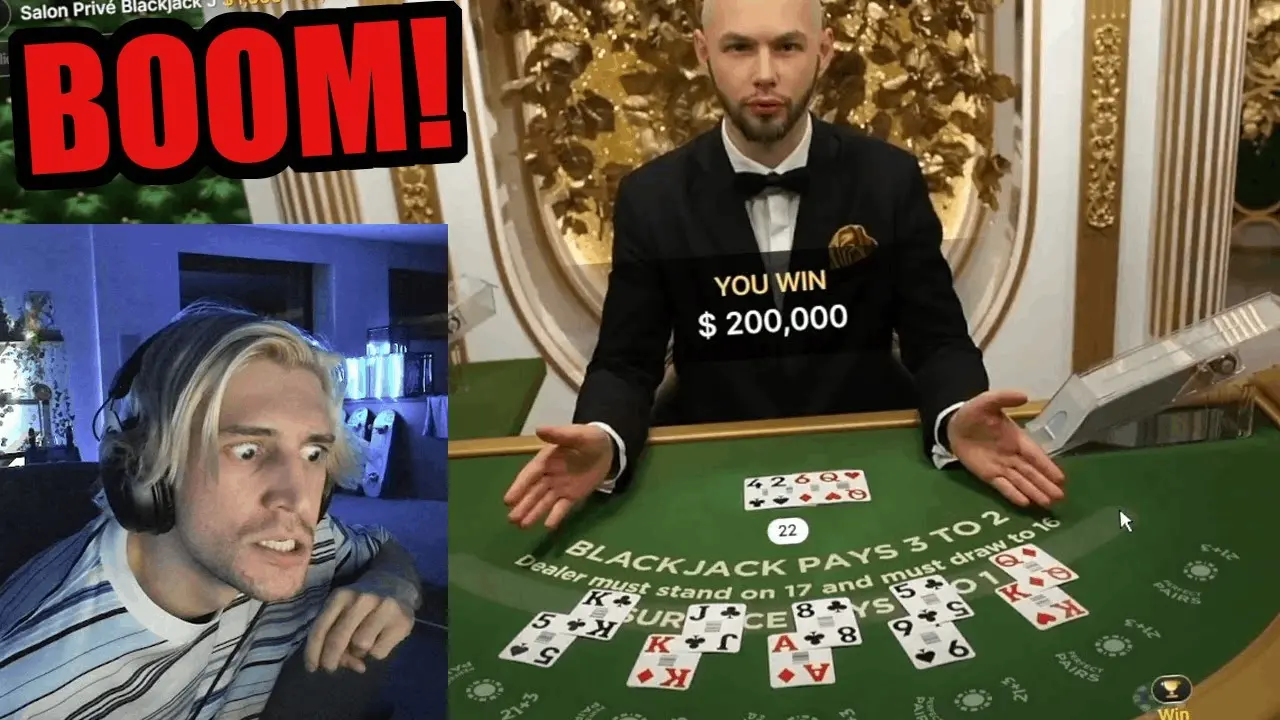
SteveWillDoIt and NELK - Both faced significant backlash and FTC scrutiny over undisclosed partnerships with online casinos, primarily Stake. SteveWillDoIt's promotional content blurred the line between organic content and paid advertising in ways that regulators flagged as problematic. The controversies around these creators helped trigger Twitch's 2022 gambling ban on streaming unlicensed casino sites.
Togi (also searched as Toji) - Smaller streamers in this space typically promote Stake, Roobet, or similar crypto-only casinos. Togi's content follows the standard format: high-stakes play, big wins highlighted, losses minimized. The platforms are the same ones every other influencer funnels traffic toward.
Captain Davo - An Australian gambling streamer who primarily promotes platforms accessible in Australia's regulatory environment. Australia's Interactive Gambling Act restricts online casino access differently than Canada - but the core pattern is identical. Celebrity endorsement, offshore platform, minimal regulatory oversight.
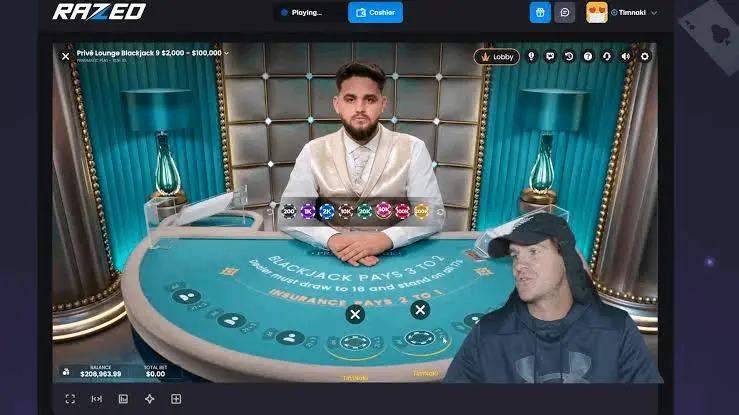
Tim Naki - A content creator whose gambling streams have attracted a growing audience. The platforms Tim Naki has been associated with follow the same pattern - Curaçao-licensed, crypto-focused, and operating outside any jurisdiction that Canadian or American regulators oversee. The sponsorship model mirrors the larger creators: affiliate codes, revenue share, and content that emphasizes wins over the statistical reality.
Corey from Pawn Stars - The crossover from reality TV to gambling promotion represents a newer frontier. These deals expand the influencer pipeline beyond streaming into mainstream entertainment, targeting an older demographic that may be less familiar with the difference between an AGCO-licensed platform and a Curaçao-registered operation. That demographic gap is valuable to offshore operators - viewers who associate a familiar TV face with trustworthiness may not think to check the casino's licensing status.
The common thread across all of these creators is obvious once I mapped it: nearly every major gambling influencer promotes the same two or three platforms - Stake, Roobet, and Duelbits. There's a reason for that, and it has nothing to do with game quality. These Curaçao-licensed operators can afford the biggest sponsorship budgets precisely because their compliance costs are a fraction of what AGCO or MGA-licensed casinos pay. Lower regulatory overhead translates directly into larger marketing spend - and the influencer deals are where that money goes.
The Platforms Behind the Celebrities - Quick Licensing Check
I reviewed the licensing status of every major platform promoted by gambling influencers. The pattern is impossible to miss.
| Platform | License | Accepts Canadians? | Regulated by AGCO? | Crypto Only? | My Verdict |
|---|---|---|---|---|---|
| Stake.com | Curaçao | Geo-blocked (VPN accessible) | No | Yes | High risk - no local protection |
| Roobet | Curaçao | Geo-blocked in Canada | No | Yes | Same concerns as Stake |
| Duelbits | Curaçao | Varies by region | No | Yes | Pattern continues |
| Rollbit | Curaçao | Varies by region | No | Yes | Noticing a trend yet? |
Every single major influencer-promoted online casino I reviewed is licensed in Curaçao. That's not a coincidence. Curaçao is the jurisdiction with the lowest compliance requirements and the weakest player protections in the licensed gambling world. It's also the jurisdiction that places the fewest restrictions on influencer marketing, crypto-only deposits, and the kind of high-volume, low-oversight operations that make sponsorship deals profitable.
According to the Curaçao Gaming Control Board's own reports, the jurisdiction has been working to strengthen its regulatory framework since 2023. But as of my last review, the gap between a Curaçao license and an AGCO or MGA license remains enormous in terms of player protection.
Red Flags - When a Celebrity Casino Promotion Is a Warning Sign
After three years of tracking influencer gambling partnerships, I've compiled the warning signs that separate legitimate (if risky) promotions from outright danger zones.
- Curaçao-only license with no other regulatory oversight. A single Curaçao license is the minimum viable compliance for an online casino. It's not the same as being "regulated" in any meaningful consumer-protection sense.
- Crypto-only deposits. Cryptocurrency transactions are harder to reverse, leave less regulatory trail, and offer fewer chargeback protections than credit card or e-wallet deposits. That's a feature for the casino, not for the player.
- No responsible gambling tools or self-exclusion options. AGCO-licensed platforms are required to offer deposit limits, session timers, and self-exclusion mechanisms. Offshore platforms promoted by streamers often lack these entirely - or bury them deep in settings menus.
- The streamer never shows losses. Or the losses look conveniently staged. Real gambling sessions include losing streaks. If every clip is a highlight reel, the content is advertising, not documentation.
- The casino uses a celebrity's name but has no official partnership confirmation. This is the MrBeast problem scaled across the industry. If the celebrity hasn't posted about the partnership on their own verified channels, assume it's fraudulent.
- The platform isn't available without a VPN. If a casino geo-blocks Canadian IP addresses, there's a reason. Playing through a VPN may violate both the platform's terms of service and local regulations - and it eliminates any already-thin consumer protection.
- Bonuses that sound impossibly generous. A 100% match bonus with 1x wagering requirements? The catch is coming. It always does. Legitimate bonuses come with 20x–40x wagering. Anything below that is either a loss leader or a trap.
What Canadian Players Should Actually Use Instead
If someone arrived at this article looking for Drake's casino or trying to find the platform from a Twitch stream, here's the honest reality check: the casinos that celebrities promote are almost universally offshore, minimally regulated, and designed for the crypto-native audience - not for Canadian players looking for consumer protection.
AGCO-licensed platforms operating in Ontario's regulated market offer something that Stake and Roobet don't: accountability. If a dispute arises, there's a regulator to file a complaint with. If a casino withholds a payout improperly, there's an enforcement mechanism. If a player needs to self-exclude, the provincial system covers every licensed operator. Player funds are segregated from operating accounts - meaning if the casino goes under, deposits are protected. That's a protection that no Curaçao-licensed platform is required to offer.
Ontario's iGaming market launched in April 2022 and has attracted over 40 licensed operators. The competition between those operators has driven promotional offers, game variety, and payout speeds to competitive levels - without requiring celebrity spokespeople to generate traffic. According to iGaming Ontario's quarterly reports, the regulated market generated over C$2 billion in total gaming revenue in its first full year.
The boring truth - and I say this as someone who has reviewed both sides of the industry - is that regulated casinos don't need celebrity endorsements because they have actual compliance to fall back on. The product sells itself when the player knows their deposit is protected, the games are audited, and the withdrawal will actually arrive. No one needs Drake's face on the homepage to trust that.
For a full breakdown of how different licensing jurisdictions protect players, I covered the details in my guide to online gambling licenses. And for operators reading this who are curious about how the influencer marketing model works from the business side, I broke that down in my piece on casino marketing strategies.
The Bottom Line on Celebrity Gambling Endorsements
These are paid advertisements. Not personal recommendations, not strategy guides, not proof that a platform is trustworthy. Drake plays on Stake because Stake pays Drake - reportedly nine figures' worth. That transaction doesn't transfer credibility to the platform. It transfers audience attention.
The streamers are playing with house money in most cases. Their risk profile has nothing in common with a player depositing C$200 from their own bank account. The emotional experience of watching someone win C$500,000 on a sponsored stream is real. The financial reality behind it is manufactured.
A Curaçao license is not consumer protection. It's a business registration with minimal compliance requirements. The fact that every major influencer-promoted casino relies on the same jurisdiction tells me everything I need to know about the regulatory appetite of these operators.
Look - if a platform needs a celebrity's face to convince players to sign up, I'd ask what's missing from the product itself. The online casinos that have earned player trust over decades of operation did it with audited games, fast payouts, and transparent terms. Not with sponsorship deals. According to the Ontario Lottery and Gaming Corporation's annual reports, regulated platforms in the province processed over C$20 billion in wagers in the 2023–2024 fiscal year - without a single celebrity endorsement driving the volume.
The next time a favorite streamer hits a massive jackpot on camera, enjoy the entertainment value. But before clicking that affiliate link in the description, check the casino's license, read the withdrawal terms, and ask whether the protection level matches the size of the deposit. That 30-second check is worth more than any celebrity endorsement.
FAQ
What online casino does Drake use?
Drake plays on Stake.com, a crypto-only platform licensed in Curaçao. The partnership is one of the largest gambling sponsorships in streaming history. Stake is geo-blocked in Canada and not licensed by AGCO, meaning Canadian players have no local consumer protection if issues arise.
Does MrBeast have an online casino?
No. MrBeast does not own, operate, or endorse any online casino. Ads claiming otherwise are scams that use his name and likeness without permission. MrBeast has publicly denounced these fraudulent campaigns. Any "MrBeast casino" is a red flag - close the tab immediately.
Are the casinos streamers promote safe for Canadian players?
Most are not regulated for Canadian players. The majority of influencer-promoted casinos hold Curaçao licenses and are geo-blocked in Canada. They lack AGCO oversight, mandatory responsible gambling tools, and dispute resolution mechanisms that licensed Canadian platforms provide. I'd categorize them as high-risk for Canadian players.
Why do all gambling streamers seem to promote the same casinos?
The handful of platforms that dominate influencer gambling - Stake, Roobet, Duelbits - all operate under Curaçao licenses, which impose minimal restrictions on marketing practices and sponsorship deals. These platforms can offer larger sponsorship budgets because their compliance costs are lower than operators licensed by stricter regulators.
Can I get in trouble for using a VPN to access a geo-blocked casino from Canada?
Using a VPN to access a geo-blocked online casino likely violates the platform's terms of service. If the casino discovers VPN usage, it could freeze the account and withhold any balance - including deposits. From a legal perspective, the regulatory grey area means limited recourse if something goes wrong.
What should I use instead of the casinos celebrities promote?
AGCO-licensed platforms operating in Ontario's regulated market offer audited games, mandatory responsible gambling tools, and a complaint process backed by a real regulator. The trade-off is fewer flashy promotions - but the consumer protection difference is significant.