


I've reviewed the back ends of dozens of online casino platforms over the past five years. Most operators don't build their casino websites from scratch - and the ones who try without understanding the technical stack usually burn through six figures before realizing they've reinvented a wheel that already exists. The process of building an online casino website involves far more than slapping a WordPress theme on a domain and plugging in some slots.
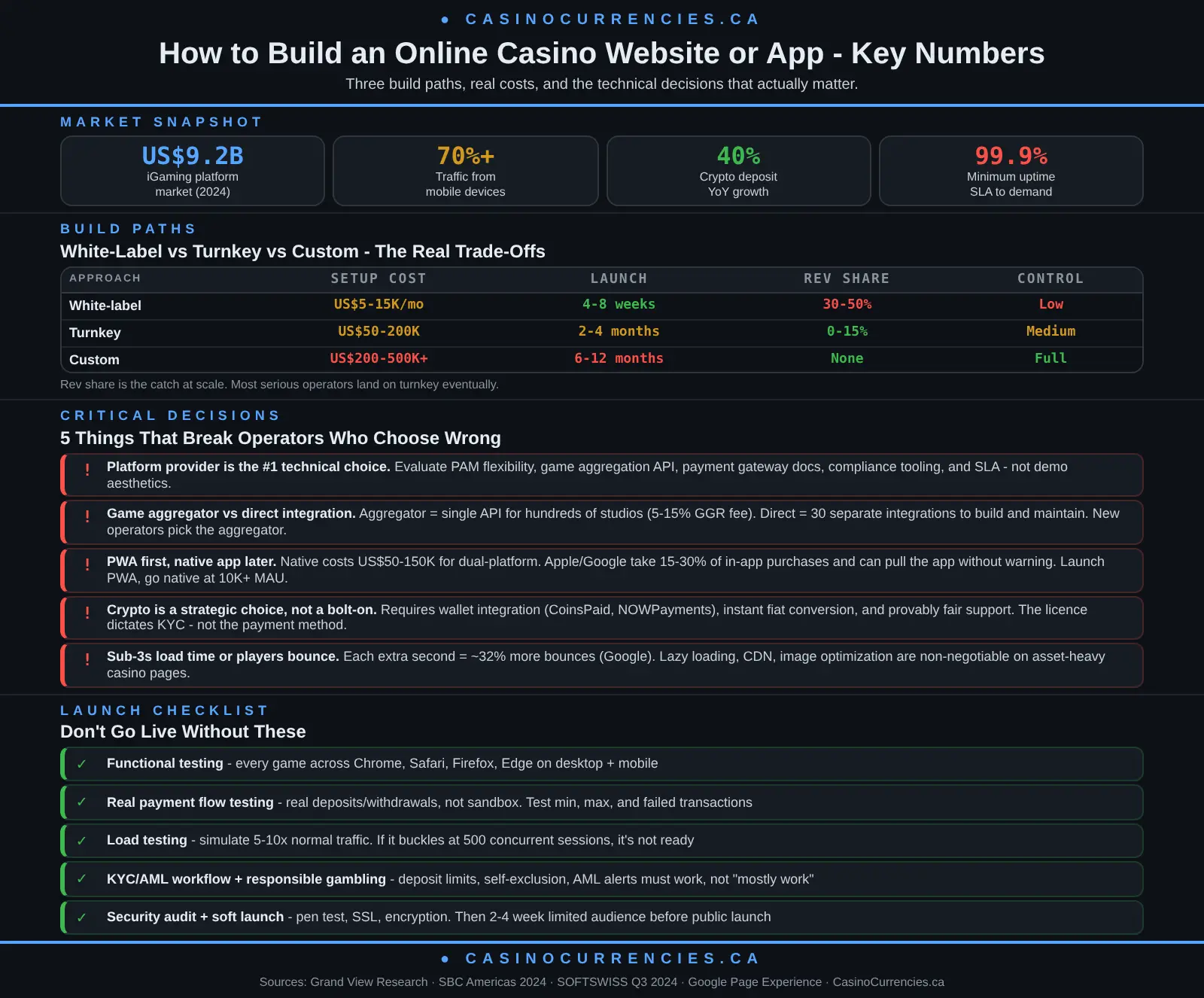
The iGaming platform market hit US$9.2 billion in 2024, according to Grand View Research. That number reflects the entire supply chain - from white-label shells to custom-engineered platforms handling millions of concurrent sessions. The right build path depends on budget, timeline, and how much control the operator actually needs.
Here's how the technical side breaks down.
White-Label vs Turnkey vs Custom Development
This decision shapes everything - cost, speed to market, margins, and long-term flexibility. I've watched operators choose wrong here and spend 12 months undoing it.
- White-label is the fastest route to create an online casino website. A provider like SoftSwiss, GammaStack, or Betinvest delivers a fully functional platform - branded with the operator's logo and colors - running under the provider's infrastructure. The operator handles marketing, the provider handles everything else. Setup takes four to eight weeks. Monthly costs run US5,000–15,000 plus a 30–50% revenue share. That revenue share is the catch. At scale, it bleeds margins dry. But for a first-time operator testing a market, it's a legitimate entry point.
- Turnkey sits in the middle. The operator licenses a complete platform - Player Account Management (PAM), game integrations, payment gateway, back office - and operates it under their own gambling license. Setup costs land between US$50,000 and $200,000. The operator keeps a much larger share of revenue but takes on compliance, hosting, and ongoing maintenance. Most serious operators land here eventually.
- Custom development means building the platform from the ground up or heavily modifying an existing PAM core. Budget starts at US$200,000 and easily climbs past $500,000 for a production-ready build. Development timelines stretch to 6–12 months before a single player registers. The upside is total control - proprietary features, unique player experiences, complete ownership of the tech stack. The downside is obvious: cost, complexity, and the risk that the dev team builds something technically sound but operationally impractical.
I've covered the full cost comparison in How Much Does It Cost to Start an Online Casino?
| Approach | Setup Cost (USD) | Time to Launch | Revenue Share | Control Level |
|---|---|---|---|---|
| White-label | 5,000–15,000/mo | 4–8 weeks | 30–50% | Low |
| Turnkey | 50,000–200,000 | 2–4 months | 0–15% | Medium |
| Custom | 200,000–500,000+ | 6–12 months | None | Full |
Choosing a Platform Provider
The platform provider decision is - no exaggeration - the most consequential technical choice an operator makes. A bad platform means rebuilding under pressure with live players, which is the operational equivalent of changing an engine mid-flight.
What to evaluate:
- PAM capabilities. The Player Account Management system is the central nervous system. It handles registration, KYC workflows, wallet management, bonus engines, and regulatory reporting. If the PAM is rigid, every downstream integration becomes harder.
- Game aggregation. How many studios are pre-integrated? Can new providers be added through a standardized API, or does each one require custom work? The difference between these two scenarios is weeks of development time per provider.
- Payment gateway flexibility. The platform needs to support Interac (essential for Canadian markets), card processing, e-wallets, and crypto - all with clean API documentation. I've seen platforms where adding a new payment method required three months of back-and-forth with the provider's dev team. That's a deal-breaker.
- Compliance tooling. Built-in responsible gambling features, automated AML triggers, and jurisdiction-specific reporting aren't optional extras. They're license conditions.
- Scalability and uptime. Ask for SLA documentation. Anything below 99.9% uptime is a red flag. During peak traffic - a major sporting event, a big promotion - the platform needs to handle 5–10x normal load without degradation.
For a deeper evaluation framework, I've written a dedicated guide: How to Choose the Right iGaming Software Provider.
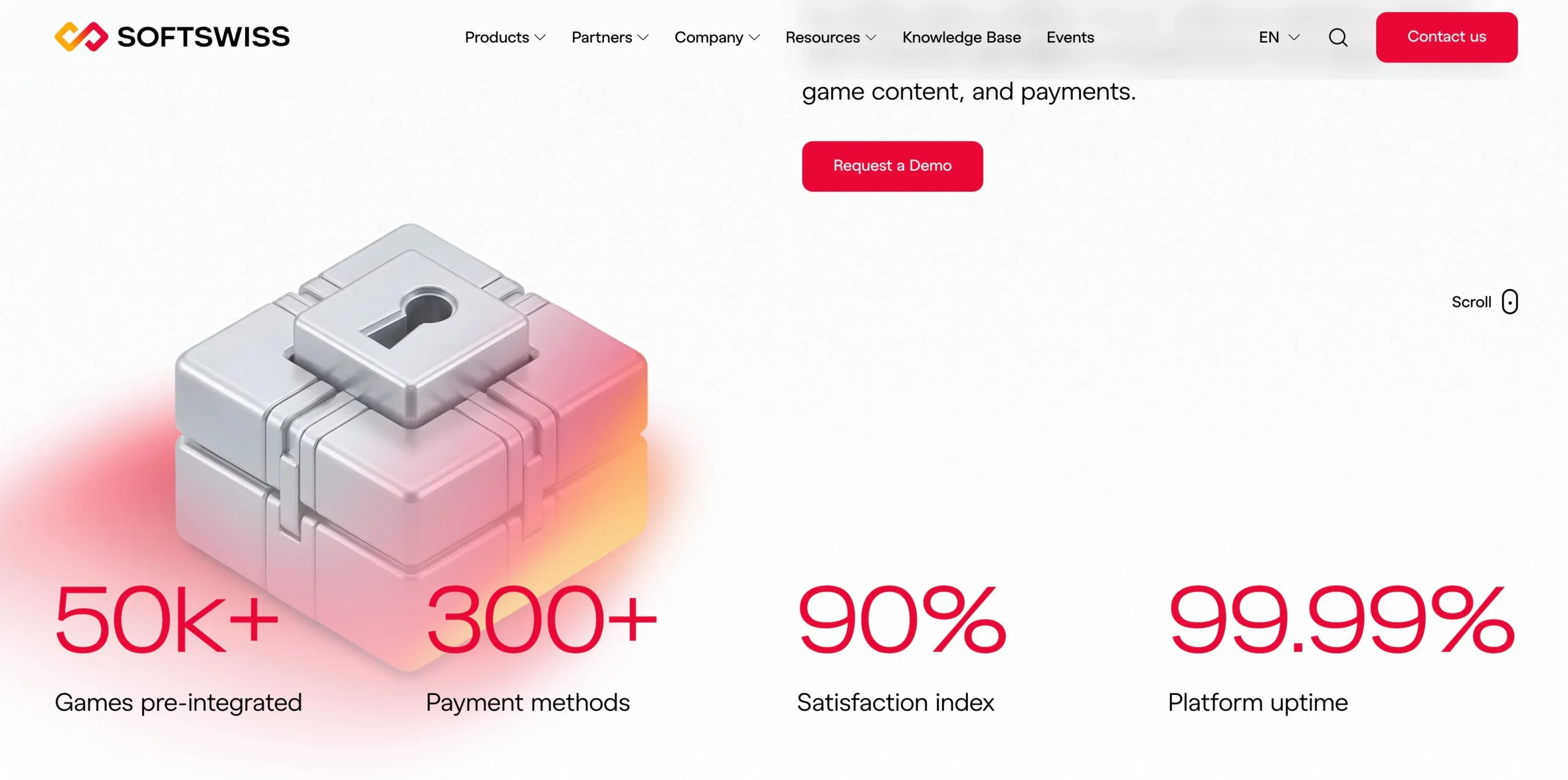
Major platform providers in the market right now include SoftSwiss, EveryMatrix, BetConstruct, Digitain, and Pragmatic Solutions. Each has strengths in different areas. SoftSwiss dominates the crypto-friendly segment. EveryMatrix is known for modular architecture. BetConstruct offers strong sportsbook integration. The right choice depends on the operator's target market and product mix.
Essential Features Every Casino Site Needs
I've tested enough casino sites - as both a reviewer and as someone analyzing their technical infrastructure - to know that players make snap judgments. The average player decides within 30 seconds whether a site feels trustworthy. Here's what the site needs on day one:
- Mobile-first responsive design. Over 70% of iGaming traffic comes from mobile devices, according to SBC Americas' 2024 industry data. A casino site that doesn't work flawlessly on a phone screen is dead on arrival. No exceptions.
- Sub-3-second load times. Every additional second of load time increases bounce rates by roughly 32%, per Google's page experience data. Casino sites are asset-heavy - game thumbnails, live feeds, promotional banners - so lazy loading, CDN distribution, and image optimization aren't nice-to-haves.
- Intuitive game lobby. Search, category filters (slots, table games, live dealer, new releases, jackpots), provider filters, and a favorites system. Players with 3,000+ titles to browse need fast navigation or they default to the same five games.
- Registration flow under 60 seconds. Name, email, password, currency, accepted T&Cs. That's it for step one. KYC document verification can happen at first withdrawal - forcing it at registration kills conversion rates.
- Responsible gambling tools. Deposit limits, loss limits, session time reminders, reality checks, self-exclusion. These are mandatory in every regulated market and - frankly - should be mandatory everywhere.
- Live chat support. Email-only support is a trust killer. I flag it as a negative in every casino review I write. Players expect answers in minutes, not hours.
- Multi-currency and multi-language support. Even if launching in a single market, building localization into the architecture from the start saves a painful retrofit later.
Game Integration - APIs and Providers
The game library is the product. Everything else - the site design, the bonuses, the payment methods - exists to get players in front of the games. And the technical mechanism for delivering those games is the API integration.
Modern game integration works through a Game Aggregation Platform (GAP). The casino platform connects to the aggregator's single API, and the aggregator provides access to hundreds of studios and thousands of titles. The alternative - direct integration with each game provider - is technically possible but rarely practical for new operators. Each direct integration means a separate API contract, separate certification per jurisdiction, and separate commercial terms. For an operator launching with 30 studios, that's 30 integrations to build and maintain.
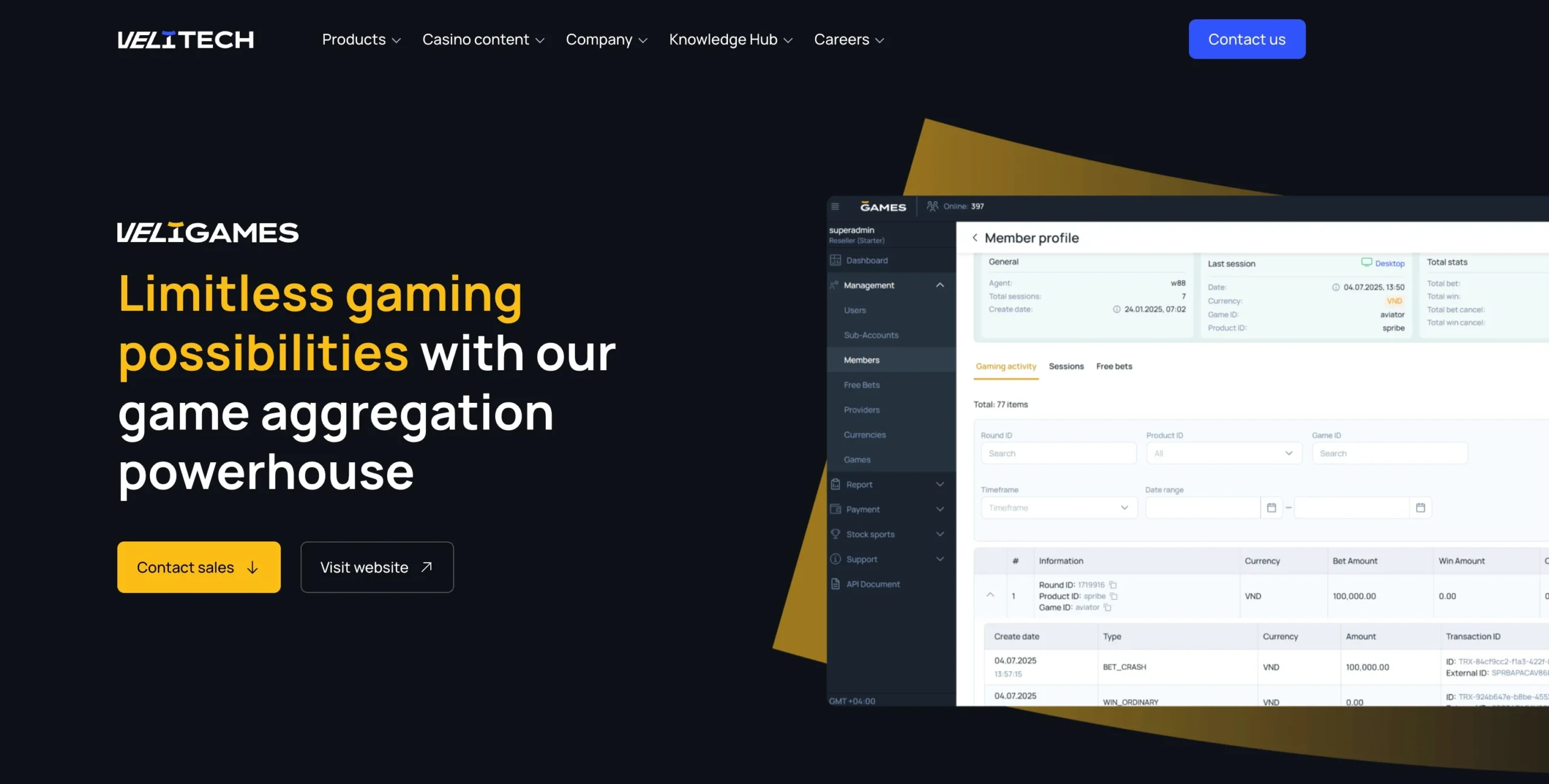
The aggregator route isn't free. Aggregators charge either a flat monthly fee or a GGR share - typically 5–15% - on top of whatever the individual game providers charge. That's a real cost to factor into the P&L.
Key considerations when making an online casino game integration work:
- Certification per jurisdiction. Every game needs an RNG certificate from an approved testing lab (GLI, eCOGRA, BMM, iTech Labs) for each regulated market. A game certified for Malta isn't automatically certified for Ontario. Budget time and money for this.
- Game performance metrics. Track RTP (Return to Player) accuracy, error rates, and latency per provider. A game that loads slowly or crashes mid-spin doesn't just frustrate players - it generates support tickets and chargebacks.
- Content rotation strategy. Adding new titles monthly keeps the lobby fresh. The best operators release 50–100 new games per month through their aggregator pipeline.
For the full business context around game content and provider relationships, How to Start an Online Casino covers the strategic side.
Mobile App Considerations
The question isn't whether to support mobile - it's whether to build a native app or rely on a progressive web app (PWA).
Here's what I've seen play out in the market: most operators - including some large ones - launch without a native app and do just fine. A well-built PWA delivers 90% of the native app experience at a fraction of the development cost. PWAs load from the browser, can be "installed" to the home screen, work offline for cached content, and don't require app store approval.
Native apps (iOS and Android) enter the picture when the operator has the player volume to justify the investment - typically 50,000–150,000 for a polished dual-platform build. But native iGaming apps come with a significant headache: app store policies.
Apple's App Store requires operators to hold a valid gambling license for every jurisdiction where the app is available. Google Play has similar restrictions. Both platforms take a 15–30% cut of in-app purchases, though most gambling apps route financial transactions through their own payment gateways to avoid this. The review and approval process can take weeks, and both stores have pulled gambling apps without warning for policy violations.
My recommendation for anyone looking to make an online casino app: launch with a PWA. Build native once the player base crosses 10,000 monthly active users and the revenue justifies the ongoing app store compliance overhead.
Crypto and Bitcoin Casino Specifics
Creating an online crypto casino adds a layer of technical requirements on top of the standard build. The demand is real - crypto deposits at online casinos have grown roughly 40% year over year since 2022, according to SOFTSWISS' Q3 2024 data.
What the crypto integration requires:
- Wallet integration. Support for Bitcoin, Ethereum, Litecoin, USDT (Tether), and at least two or three altcoins. CoinsPaid, NOWPayments, and B2BinPay are the most common payment gateway providers for iGaming crypto transactions.
- Instant conversion. Most operators offer crypto deposits that auto-convert to a fiat equivalent (USD, EUR, CAD) for gameplay, then convert back for withdrawal. This shields the operator from volatility risk. Some provably fair casinos let players wager directly in crypto - but that introduces bookkeeping complexity.
- Provably fair gaming. Crypto-native players expect provably fair verification - a cryptographic method that lets players independently verify each game outcome. It's a trust signal that traditional casinos don't offer, and integrating it requires specific game providers (like those on the Stake model).
- KYC flexibility. Some crypto casinos operate with minimal KYC under Curacao licenses. Others in regulated markets (Ontario, UK) still require full identity verification regardless of the deposit method. The license dictates the KYC threshold - not the payment method.
The operational model for a crypto casino site isn't fundamentally different from a fiat one. The games are the same. The marketing challenges are the same. But the payment infrastructure, the target audience, and the regulatory stance differ enough that the crypto angle should be an intentional strategic choice, not an afterthought bolted on post-launch.
UX and Design Best Practices
Casino UX has converged around a set of patterns that work - and deviating from them without a compelling reason is usually a mistake.
- Dark backgrounds with high-contrast accents. This is the industry standard for a reason. Dark themes reduce eye strain during long sessions and make game thumbnails pop. Light-themed casinos exist, but they're the minority.
- Sticky navigation. The main menu, search bar, and account balance should remain visible regardless of scroll position. Players check their balance constantly. Making them scroll to find it is a friction point.
- Lobby layout. Category tabs across the top (or a sliding horizontal menu on mobile), followed by curated game rows - "Popular Now," "New Releases," "Live Casino," "Jackpots." The lobby is essentially a content recommendation engine. Operators who invest in personalization - showing recently played games, suggesting titles based on play history - see measurably higher engagement.
- Minimal registration friction. Every extra field on the signup form costs conversions. The best-performing casino sites use a two-step registration: basic details first, full KYC at first withdrawal.
- Speed over flash. Heavy animations, auto-playing promo videos, and complex transition effects look impressive in a demo but tank performance on mid-range phones. And a disproportionate share of casino players - especially in emerging markets - use mid-range devices.
Testing and Launch
Going live without proper testing is asking for trouble - and I've seen the results when operators skip this step. Broken payment flows on launch day, games that don't load on certain browsers, bonus calculations that credit the wrong amount. Each failure costs real money and real trust.
Pre-launch testing checklist:
- Functional testing. Every game loads and plays correctly across Chrome, Safari, Firefox, and Edge on both desktop and mobile.
- Payment flow testing. Real deposits and withdrawals - not sandbox transactions - through every enabled payment method. Test edge cases: minimum deposit, maximum withdrawal, failed transaction handling.
- Load testing. Simulate peak traffic. A casino that buckles under 500 concurrent sessions isn't ready for a marketing push.
- KYC/AML workflow testing. Upload test documents, trigger AML flags, verify that the compliance team receives alerts properly.
- Responsible gambling feature testing. Set a deposit limit, hit it, and confirm the system blocks the next deposit. Set a self-exclusion, confirm the account locks. These aren't features that can be "mostly working."
- Security audit. Penetration testing, SSL verification, data encryption validation. Player data breaches end operators.
Soft launch
Run a two-to-four-week soft launch with a limited audience before the public launch. Invite internal testers, friends, a small paid cohort - anyone who'll use the site under real conditions and report issues. Fix what breaks. Then launch publicly.
Once the site is live, the work shifts from building to operating - and that means marketing, player retention, and ongoing optimization. I've covered the marketing side in How to Promote an Online Casino.
FAQ
Can I build an online casino website for free?
No. Even the cheapest white-label setups carry monthly fees starting at US$5,000. Open-source gambling platforms exist, but they lack the licensing compliance, certified game integrations, and payment processing that real-money operations require. "Free" in this industry means "not ready for real players."
How long does it take to build an online casino site?
A white-label can be branded and launched in 4–8 weeks. A turnkey build takes 2–4 months. Custom development runs 6–12 months. These timelines don't include licensing - which can add another 6 weeks to 12 months depending on the jurisdiction. For the full timeline breakdown, see How to Start an Online Casino.
Do I need a native mobile app, or is a website enough?
A well-built progressive web app handles the majority of mobile use cases. Native apps make sense once the operation has 10,000+ monthly active users and the revenue to cover ongoing app store compliance. Most operators launch without a native app and add one later.
How do I create an online casino game?
Most operators don't create their own games - they license content from studios like Pragmatic Play, NetEnt, or Evolution through a game aggregator. Building proprietary games requires a dedicated development studio, RNG certification from an approved testing lab, and integration with the platform's API. It's a separate business entirely.
What makes a crypto casino different to build?
The core platform is the same. The differences are in payment infrastructure (crypto wallet integration, instant conversion gateways), provably fair game support, and - in some jurisdictions - lighter KYC requirements. The licensing jurisdiction determines how differently a crypto casino operates from a fiat one.
What's the biggest technical mistake new casino operators make?
Choosing a platform provider based on demo aesthetics rather than API documentation, compliance tooling, and payment gateway flexibility. A pretty front end means nothing if the back office can't generate a regulatory report or the payment gateway drops 5% of transactions. I've broken down the evaluation framework in How to Choose the Right iGaming Software Provider.