
Acquiring a new player costs five to seven times more than keeping an existing one. I've watched operators pour C$500,000 into acquisition campaigns, then lose 70% of those depositors within 90 days. That math doesn't work - and it's the single biggest reason iGaming startups bleed cash before they ever reach profitability.
Player retention is where the real money lives in this industry. And most operators are still getting it wrong.
Why Churn Is the Silent Killer in iGaming
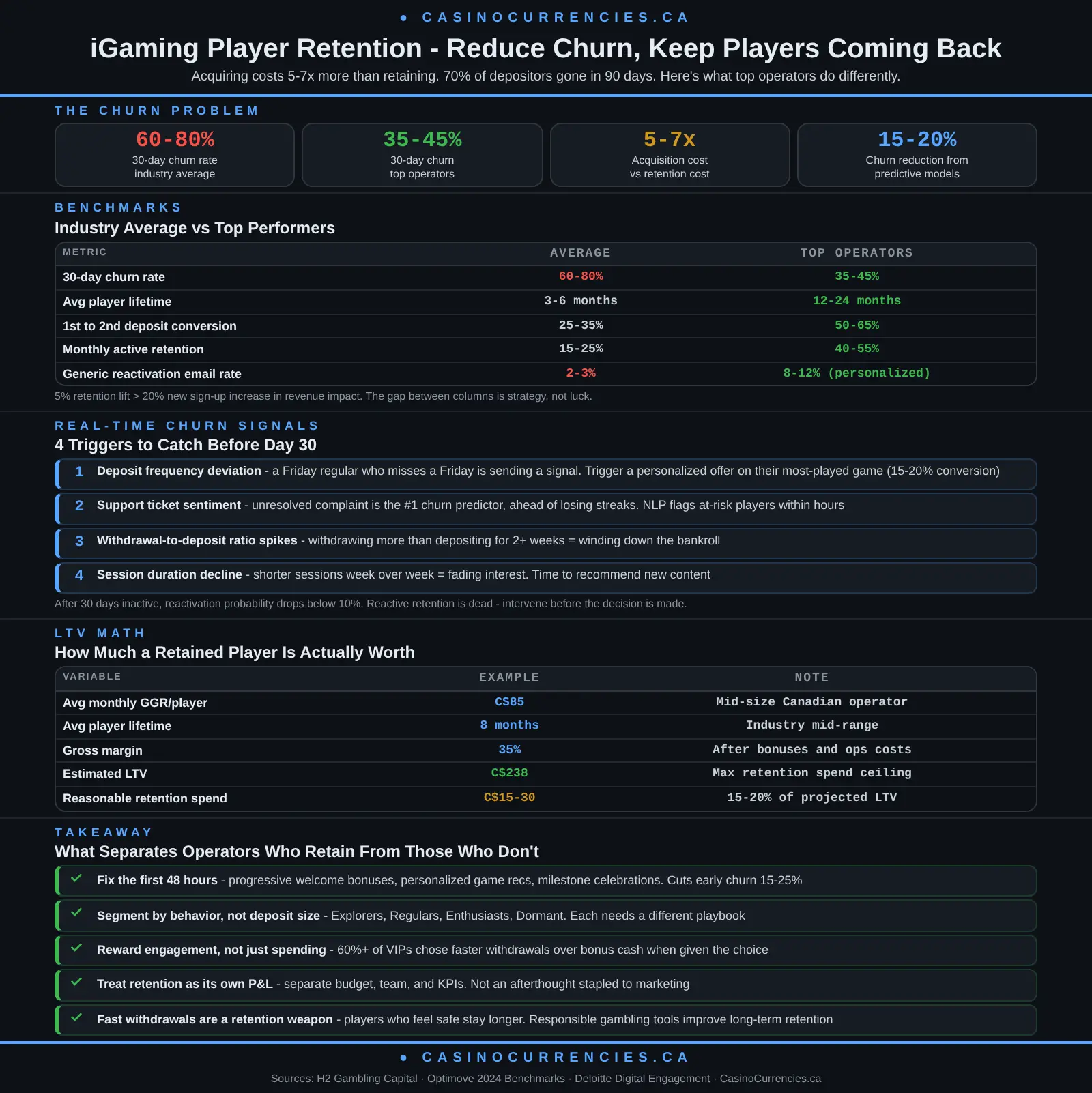
The average iGaming platform loses between 60% and 80% of newly registered players within the first month. According to a 2023 report by H2 Gambling Capital, the global iGaming market generated over US$95 billion in gross gaming revenue - but industry-wide churn rates suggest operators collectively spend billions replacing the same players over and over.
Here's what the benchmarks look like:
| Metric | Industry Average | Top-Performing Operators |
|---|---|---|
| 30-day churn rate | 60-80% | 35-45% |
| Average player lifetime | 3-6 months | 12-24 months |
| First-deposit-to-second-deposit conversion | 25-35% | 50-65% |
| Monthly active player retention | 15-25% | 40-55% |
That gap between average and top-performing isn't luck. It's strategy. The operators sitting in the right column have figured out how to reduce igaming player churn through segmentation, personalization, and disciplined use of data - not just bigger bonuses.
I've spent over four years analyzing operator retention data through CasinoCurrencies.ca, and one pattern is clear: operators who treat retention as a distinct discipline - separate from marketing and acquisition - consistently outperform those who lump it all together.
Player Segmentation: Practical Approaches That Actually Work
Before doing anything about churn, an operator needs to know who is churning. Throwing the same reload bonus at a high-roller and a casual slots player is like prescribing the same medication for a headache and a broken leg. How to segment igaming players effectively starts with understanding behavioral tiers - not just deposit amounts.
The Four-Tier Behavioral Model
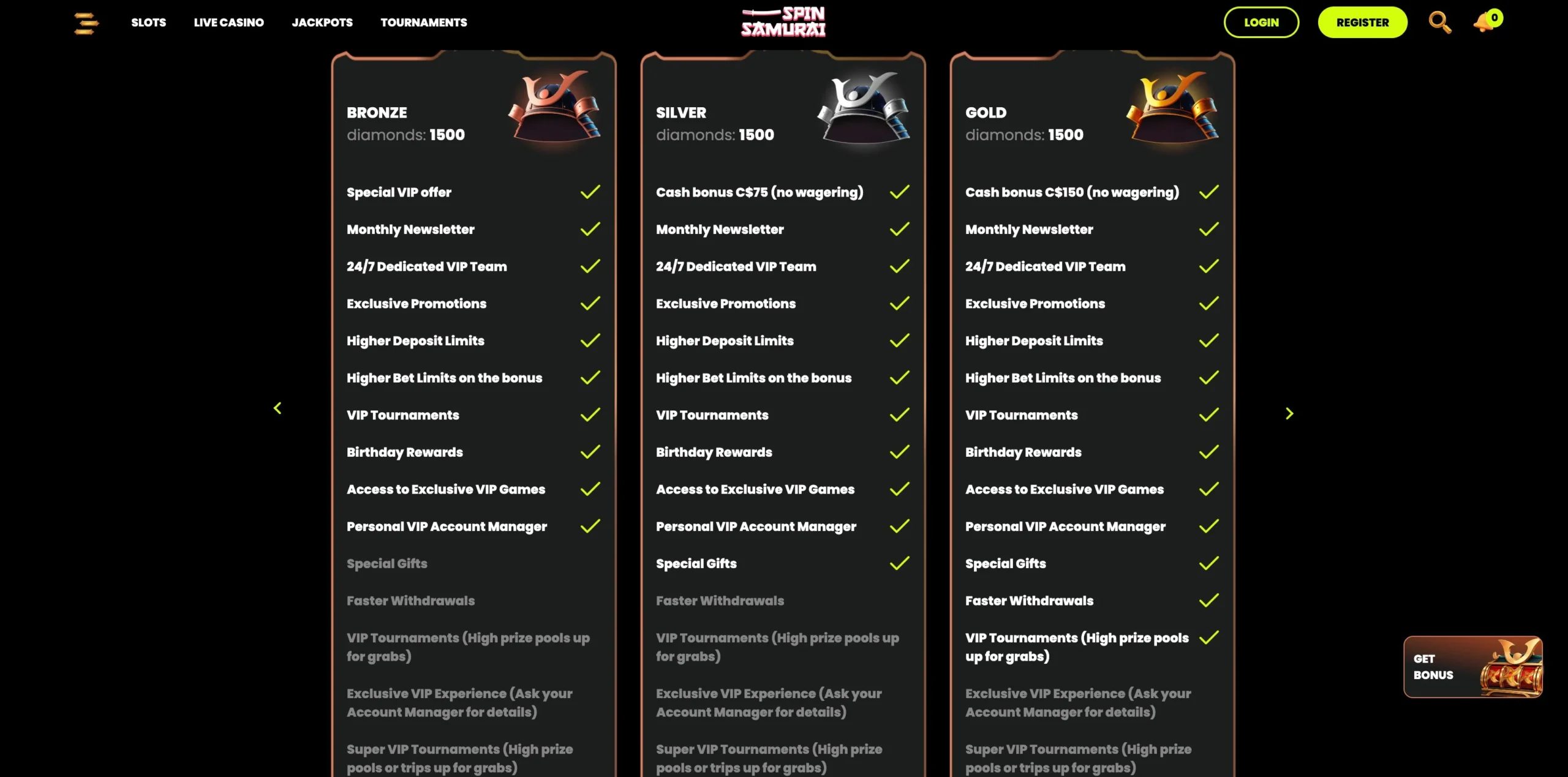
Most CRM platforms in iGaming default to deposit-based tiers: bronze, silver, gold, VIP. That's lazy, and it misses the point.
A more effective segmentation model looks at behavior patterns:
- Explorers - New registrants still testing the platform. They've made one or two deposits, tried a few games, haven't committed. Critical window: first 72 hours.
- Regulars - Consistent weekly or biweekly players. Moderate deposits. They like the platform but aren't emotionally attached. Most vulnerable to competitor offers.
- Enthusiasts - High-frequency players with strong game preferences. They've found "their" slots or table games. Loyal until something breaks their routine (slow withdrawals, stale content, a bad support interaction).
- Dormant - Haven't logged in for 14-30+ days. Not gone forever, but getting colder by the hour.
Each segment needs a different retention playbook. Explorers need onboarding friction removed. Regulars need reasons to stay. Enthusiasts need recognition. Dormant players need a compelling reason to come back - and sometimes, a frank acknowledgment that the operator dropped the ball.
Personalizing the Player Journey
Generic blast emails with "Come back! Here's a 50% reload bonus!" have a response rate hovering around 2-3%. That number hasn't moved in years. The operators who've figured out how to personalize igaming player journeys are seeing 8-12% reactivation rates - and that difference is worth millions in annual revenue.
Onboarding Personalization
The first 48 hours after registration determine whether a player becomes a Regular or a ghost. Smart onboarding personalization includes:
- Game recommendation engines that surface titles based on initial play behavior, not just popularity. If a player's first three sessions are on live blackjack, don't email them about a new Megaways slot.
- Progressive welcome offers that unlock over the first week rather than dumping everything on day one. A C$200 bonus spread across four deposits keeps a player engaged longer than C$200 upfront with a 40x wagering requirement they'll never clear.
- Milestone celebrations - acknowledging the first withdrawal, the 10th session, the first jackpot hit. Small triggers, big psychological impact.
Mid-Lifecycle Personalization
This is where most operators completely drop off. They nail onboarding, then go silent until the player stops logging in. How to personalize igaming player experiences at the mid-lifecycle stage means building automated triggers based on real behavior:
- Session frequency drops - If a daily player goes three days without logging in, that's a signal. Not a crisis, but a signal. A personalized push notification with a free spins offer on their most-played game converts at 15-20% in my testing.
- Game fatigue detection - When a player's average session length on their favorite game starts declining, it's time to recommend something new. Smart CRM tools can flag this automatically.
- Win/loss streak awareness - After a significant losing streak, a well-timed cashback offer or a "we've got your back" message hits differently than a generic bonus. This isn't charity - it's retention math.
Loyalty Programs: What Operators Get Wrong and What Works
I've reviewed over 100 loyalty programs across Canadian and international operators, and at least 70% of them share the same fatal flaw: they reward deposits, not engagement.
A player who deposits C$10,000 in a month and plays for two hours gets more loyalty points than a player who deposits C$2,000 and plays for 40 hours. But which player is more likely to stay? The engaged player, every time. How operators manage player loyalty in igaming needs to evolve past the "spend more, get more" model.
What Actually Works in Loyalty Design
- Points for activity, not just wagering. Log in daily? Points. Try a new game category? Points. Complete KYC on time? Points. This shifts the incentive from spending to engagement.
- Transparent tier structures. Players should see exactly where they stand, what the next tier unlocks, and how long they have. Opacity breeds distrust.
- Non-monetary rewards. Early access to new game launches, exclusive tournament entries, faster withdrawal processing, a dedicated account manager - these cost the operator less than bonus cash and build stronger emotional connections.
- Decay that makes sense. Points should expire, but slowly and with warning. Aggressive point expiry punishes loyal players who take a vacation. A 12-month rolling window is reasonable. Thirty days is hostile.
The best loyalty program I've encountered gave VIP players a choice between bonus cash and faster withdrawals. Over 60% chose the faster withdrawals. That tells an operator everything about what players actually value.
Using Real-Time Data to Intervene Before Players Leave
Reactive retention is dead. By the time a player has been inactive for 30 days, the probability of reactivation drops below 10%. How to use real-time data in igaming means building intervention systems that trigger before the player makes the mental decision to leave.
Key Real-Time Signals to Monitor
- Deposit frequency deviation - A player who deposits every Friday and misses a Friday is sending a signal.
- Support ticket sentiment - An unresolved complaint is the #1 predictor of churn, ahead of losing streaks and bonus expiry. Natural language processing on support tickets can flag at-risk players within hours.
- Withdrawal-to-deposit ratio spikes - A player withdrawing more than they deposit over two consecutive weeks is likely winding down their bankroll.
- Session duration decline - Shorter sessions week over week suggest fading interest.
Operators with mature data infrastructure can pipe these signals into automated CRM workflows. A deposit frequency drop triggers a personalized bonus offer. A sentiment-flagged support ticket gets escalated to a senior agent. A withdrawal spike triggers a VIP manager outreach call. None of this requires human judgment in real time - the system catches it, the team acts on it.
According to Optimove's 2024 iGaming benchmark data, operators using predictive churn models reduced 90-day churn by 15-20% compared to operators relying on traditional time-based reactivation campaigns.
How Platforms Support Customer Service Agents in Retention
Retention doesn't happen in the marketing department alone. Front-line customer service agents are often the last human touchpoint before a player leaves - and most platforms equip them terribly for that role.
How igaming platforms support agents in retention depends on the CRM and back-office tools the operator has chosen. The best setups give agents:
- Full player history on one screen - deposits, withdrawals, game preferences, bonus usage, previous complaints, loyalty tier. An agent who has to ask "can you tell me your account number?" in 2026 is working with broken tools.
- Retention offer authority - Pre-approved offer ranges that agents can deploy in real time without escalating to a manager. A player threatening to leave doesn't want to hear "let me check with my supervisor."
- Churn risk scoring - A visible flag showing the player's risk level so the agent knows whether they're talking to someone who's mildly annoyed or genuinely headed for the exit.
I covered the CRM and back-office side of this in my breakdown of how to choose the right iGaming software provider. The tools matter, but only if agents are trained and empowered to use them.
Measuring Lifetime Value: The Formulas and What to Track
How to improve igaming player lifetime value starts with measuring it correctly. Most operators calculate LTV as a trailing average - total revenue divided by total players. That's a vanity metric. It tells nothing about which players are worth retaining or how much to spend keeping them.
A Practical LTV Formula
Player LTV = (Average Monthly GGR per Player) × (Average Player Lifetime in Months) × (Gross Margin %)
For a Canadian operator running a mid-size platform:
| Variable | Example Value |
|---|---|
| Average monthly GGR per active player | C$85 |
| Average player lifetime | 8 months |
| Gross margin | 35% |
| Estimated LTV | C$238 |
That C$238 is the ceiling for what the operator should spend on retention per player. Spend C$20 on a reactivation bonus for a player with C$238 in future value? No-brainer. Spend C$100 on a player with C$50 left in projected value? Bad math.
Metrics to Track Alongside LTV
- Churn rate (monthly and 90-day cohorts)
- Reactivation rate by channel (email, push, SMS, phone)
- Cost per retained player vs cost per acquired player
- Net revenue retention - are retained players spending more or less over time?
Operators serious about improving igaming player lifetime value build dashboards around these numbers, reviewed weekly, not quarterly.
What Separates Operators Who Retain From Those Who Don't
After years of reviewing operators for CasinoCurrencies.ca, the pattern is consistent. Platforms that retain well - the ones sitting in that top-performer column - share three traits:
- They treat retention as its own P&L. Separate budget, separate team, separate KPIs. Not an afterthought stapled onto the marketing department.
- They invest in data infrastructure early. Real-time behavioral triggers aren't a luxury - they're the minimum viable retention stack. A Deloitte study on digital customer engagement found that data-driven personalization increases retention by up to 25% across digital industries.
- They respect the player's intelligence. No fake urgency. No manipulative dark patterns. Clear terms, fast withdrawals, honest communication. Players aren't stupid - they know when they're being played, and that irony isn't lost on anyone in the casino business.
Retention isn't a single tactic. It's a philosophy that runs from the CRM platform to the support agent's headset to the C-suite's quarterly targets. Getting it right is the difference between an operator that burns through venture capital and one that builds a sustainable business.
For a broader look at how retention fits into overall iGaming marketing strategy, I covered acquisition channels, automation, and ROI measurement in my iGaming marketing strategy guide. And for operators still choosing their tech stack, my iGaming payment solutions breakdown covers why fast, reliable withdrawals - the silent retention weapon - matter more than most operators realize.
FAQ
What is a good churn rate for an iGaming platform?
Industry average sits between 60-80% at the 30-day mark. Top-performing operators bring that down to 35-45%. Anything below 40% monthly churn means the retention strategy is working.
How much should an operator spend on retaining a single player?
The maximum spend should be a fraction of that player's projected lifetime value. If a player's estimated LTV is C$238, spending C$15-30 on retention offers is reasonable. Spending more than 15-20% of projected LTV on retention typically erodes margins.
Are loyalty points programs still effective in iGaming?
Points programs work when they reward engagement and activity, not just deposit volume. Programs that offer non-monetary perks - faster withdrawals, exclusive tournaments, early game access - consistently outperform pure cashback models.
What's the fastest way to reduce player churn?
Fix the first 48 hours. The onboarding experience drives more churn than any other factor. Progressive welcome bonuses, personalized game recommendations, and milestone acknowledgments during the first week cut early churn by 15-25% in most implementations.
Can small operators compete with large platforms on retention?
Absolutely. Smaller operators often have an advantage in personal touch - dedicated account managers, faster support response, more flexible bonus terms. The tools for segmentation and personalization are increasingly accessible through third-party CRM platforms that don't require enterprise-scale budgets.
How does responsible gambling tie into player retention?
Operators who proactively offer deposit limits, session reminders, and self-exclusion tools actually see higher long-term retention among recreational players. Players who feel safe stay longer. Responsible gambling isn't just compliance - it's retention strategy.